
Over the last several months I have felt God calling me into more active leadership roles. I recently began co-leading a community group with my wife and another couple. Now I feel that He wants me to put thoughts down on paper (well, sort of) for others to read, share, or ponder. This blog seems to be the perfect outlet for this purpose.
When selecting a title for this blog I wanted to find something that was interesting, meaningful, and slightly pointed. It is not my intent to annoy or frustrate, but hopefully to encourage thought/discussion. So what do I mean by a “new radical reformation?” To answer this requires a brief review of church history.
A long time ago…
When thinking about the Protestant Reformation, Martin Luther and his Ninety-Five Theses are typically the first things to come to mind, and rightly so. Luther, however, was not the only man that took a leading role in the reformation. Another reformer named Ulrich Zwingli (pictured below) soon began building a following in Switzerland. Men like Luther, Zwingli, and John Calvin, who followed several years later, were known as the magisterial reformers. This was the mainstream branch of the Reformation that sought to remove the corruption of the church and move it away from focusing on works-based salvation.
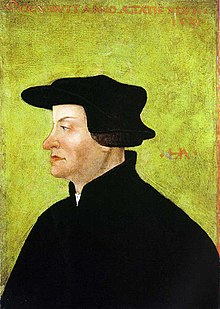
Zwingli had a close group of followers called the Swiss Brethren. They met together with great regularity until Zwingli broke off ties with them over their desire to seek more change at a faster, or more radical, pace. This was mainly focused around the issue of infant baptism. The magisterial reformers did not desire to upset the status quo in regards to this issue. The Swiss Brethren, who included men like Conrad Grebel, George Blaurock, and Felix Manz (all of whom may be discussed at a later point), began what became known as the Radical Reformation.
The Radical Reformation was not satisfied with just modifying the church, but rather sought to completely “destroy” what it had become and go back to the way it functioned in the New Testament, and to do it quickly. Since one of their main topics was “believer’s baptism” (as opposed to infant baptism) they were eventually given the name Anabaptists or “re”-baptizers. Over time, this group would develop into organizations such as the Mennonites, the Amish, and even some branches of the Baptist Church.
While the Radical Reformation clashed with many of the magisterial reformers on many points of doctrine, my goal is not to side with a particular theological point in the titling of this blog. My hope, like these men, is to see the church function as it did during the New Testament period, something I do not think it does well at all, and to do it with a “radical” passionate fervor.
A longer time ago…
So what did the New Testament church look like? That is a very broad question that could take years to even begin to understand. There are, however, a few places in Scripture where we get a glimpse of the church.
Just after the disciples received the Holy Spirit in Acts 2, Peter spoke to a large crowd on the day of Pentecost. Three thousand people were saved. In Acts 4 after Peter’s second sermon, over five thousand were saved. These were amazing results! Acts 2:43-47 really puts that growth into perspective though:
43Everyone was filled with awe, and many wonders and miraculous signs were done by the apostles. 44All the believers were together and had everything in common. 45Selling their possessions and goods, they gave to anyone as he had need. 46Every day they continued to meet together in the temple courts. They broke bread in their homes and ate together with glad and sincere hearts, 47praising God and enjoying the favor of all the people. And the Lord added to their number daily those who were being saved.
They were living as a body, one, wholly unified, and the Lord added so many people that they quit counting. We were just told that more came each day. I know in my ministry I would be thrilled to even see one person in a month, much less a week or a day!
What this blog is NOT…
- Not a rant about my thoughts. My desire is that it will be well thought out.
- Not a ministry methods how-to. (Though some of that may naturally come out.)
- Not my own systematic theology. I am not a theologian; I am only halfway through a seminary degree! While I may discuss issues of theology, it is as an attempt to think out loud, hopefully with you including yourself in the discussion.
What this blog IS…
- This will be my musings about what I am studying in Scripture or seeing as trends in the church.
- This will be an opportunity to keep myself accountable. I hope to stay consistent in working on this blog. Feel free to encourage me.
- This will hopefully be a discussion. Please leave comments whether you agree with me or not. I want to sharpen others and be sharpened myself.
I look forward to having a blast as we glorify our Creator together!

No comments:
Post a Comment